

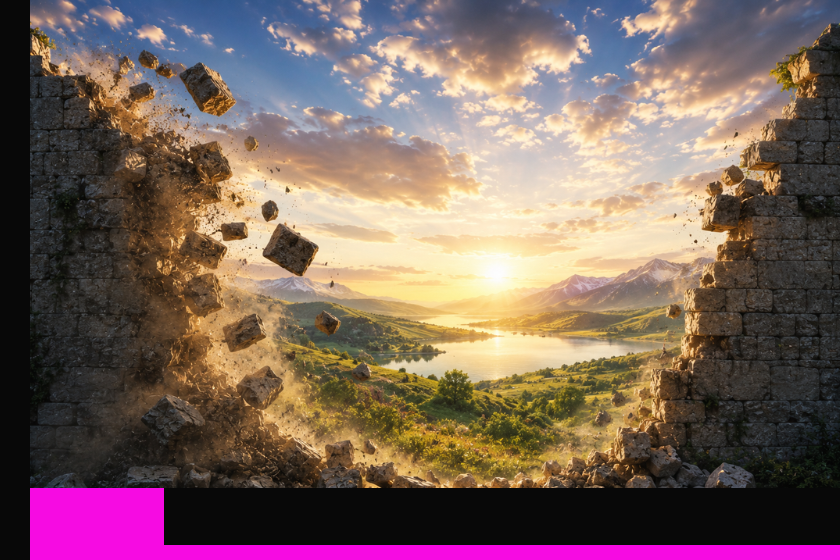
There are walls in the Bible that God tears down, and there are walls God rebuilds. At first glance, that seems contradictory.
In Scripture, walls built from fear, pride, exclusion, or self-protection eventually fall. In Genesis, Babel’s tower rises from fortified ambition, a humanity trying to reach heaven without humility or dependence. Its walls crumble when God impedes their collective power, a people united only to save themselves. In the book of Joshua, Jericho’s walls symbolized human confidence against God. They collapsed at the sound of worship and trust.
Jerusalem’s walls are breached repeatedly when the city is no longer faithful in its role to be a safe haven of justice and refuge for the vulnerable. Yet later, God calls Nehemiah to rebuild Jerusalem’s walls. And in the final pages of Scripture, the holy city—the New Jerusalem—descends from heaven with high walls and gates of pearl. So walls can be good depending on their purpose and what the boundaries stand for.
God does not preserve walls that keep people from life. The walls of the New Jerusalem are different because the gates are always open.
The book of Revelation says, “On no day will its gates ever be shut.” The city has walls, but no locked doors. Strength without exclusion. Security without suspicion. Identity without hostility. It is a redeemed city where people no longer hide from one another or from God.
That image stirs the longings of my heart. Too often as a pastor, I meet people who were told they could not be baptized because they had not yet achieved some expected standard or fit neatly into religious culture. Honestly it deeply upsets me to see someone sincerely seeking God but “Christians” do the Enemy’s work by creating hoops to jump through, charging money for spiritual support or causing discouragement. It stinks of gatekeeping and spiritual abuse.
I understand the desire for discipleship, integrity, and meaningful commitment. But sometimes we turn the waters of grace into guarded territory. God doesn’t need a secretary or security guard. He does reimind us in the Bible though to guard our own heart, words and actions (Proverbs 4:23, 16:17, Psalm 34:13)
The early church certainly wrestled with this tension. In Acts, religious insiders were shocked by how quickly the Spirit moved toward outsiders. An Ethiopian eunuch—someone physically and spiritually excluded under old systems—asks a simple question while standing beside water: “What can stand in the way of my being baptized?” It’s one of the most revealing questions in the Bible. What indeed?
It’s not only institutional gatekeeping. There is also a counterfeit spirituality that quietly sells people the idea that Jesus alone is insufficient. Holy water sold as protection against ill will. Blessed objects marketed for their spiritual advantage. Symbols and tokens treated like spiritual currency. Religious accessories offered as though God’s grace requires add-ons, upgrades, or middlemen.
The gospel will tear those walls down too. As Christ is crucified, the temple veil tears apart. Because of Jesus’ sacrificial love, the dividing walls come down. Access to God is no longer reserved for the spiritually elite, the culturally acceptable, or the financially able.
The kingdom of God is not a gated community. This does not mean boundaries disappear entirely. The New Jerusalem still has walls. Love still protects. Truth still matters. Communities still need wisdom, discernment, and formation. But the gates remain open because God’s heart remains open.
That is the redemption story running through Scripture: God transforming walls of exclusion into places of welcome. Not erasing holiness, but redefining it through Jesus. Holiness no longer means distancing ourselves from broken people; it means becoming the kind of people through whom healing and grace can flow. Just as Jesus reached out and touched those classified as “unclean”.
Maybe that’s the question the Church must wrestle with again in our time: Are our walls defining a place of sanctuary —or preventing people from finding it? Because the city God is building has many rooms and open gates. And perhaps the Church is at its most faithful when people encounter at its doors the unmistakable welcome of Jesus.