
This week, I was reading my Bible, as I try to make a habit of doing, and something happened that I think many of us can relate to. Have you ever read a passage of Scripture so many times that you thought you knew it by heart—only to read it again one day and suddenly see something you had never noticed before?
The words haven’t changed. The story hasn’t changed. But somehow, you have.
And suddenly, a verse you’ve passed over dozens of times begins to speak to you differently. A single detail catches your attention. A familiar sentence feels unfamiliar. It’s almost as if Scripture has been waiting for the right moment to reveal something you weren’t ready to see before.
This happened to me this week. I was reading Jeremiah 5:31. In this passage, Jeremiah is speaking to the people on God’s behalf—a people who had become comfortable with false teaching and corrupt spiritual leadership. They were not simply being deceived; they had grown to love the deception because it told them what they wanted to hear. The verse says:
“The prophets prophesy falsely,
And the priests rule by their own power;
And my people love to have it so.
But what will you do in the end?”
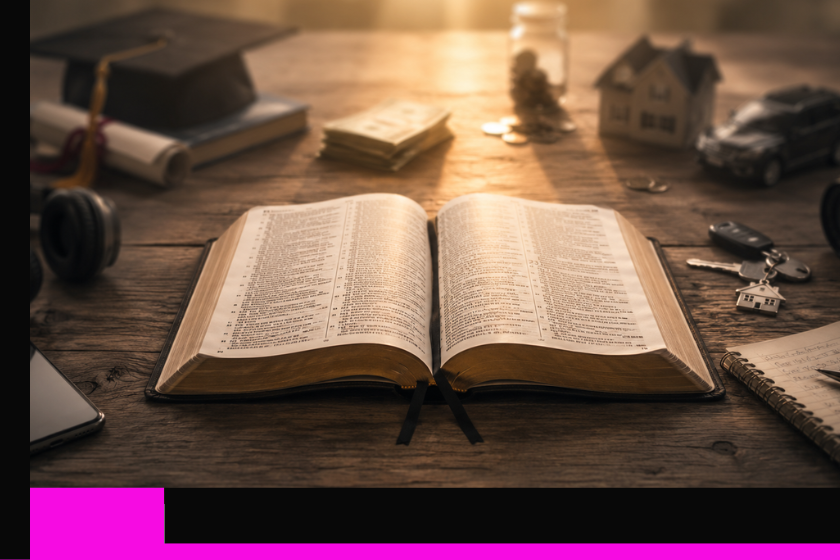
It was not so much the verse’s direct acknowledgment of the people’s enjoyment of falsehood, their hunger for power, or even their willingness to embrace deception. Rather, it was the way the verse ends with a question. A question that, to me, seemed to ripple through the pages of history and reach across the timeline, and address not its audience, rather me. It felt as if God were asking me: But what will I do in the end? As I continued reading, I found myself returning to that phrase again and again. It lingered in my mind long after I had moved past the verse, settling somewhere deeper than it had before. Somehow, words I had read countless times had suddenly taken on a weight I had never noticed. To be frank, I found the words unsettling at the moment. They lingered—almost nagging at the back of my mind. And naturally, I began to look inward, quietly examining my priorities and, before anything else, the state of my relationship with God. Every priority I could think of began to shrink into nothing when I placed it beside God. My pursuit of education, my desire for financial security, and even deeper than that, the sins I had so desperately clung to—The moments I chose entertainment over communion with God, the moments I chose myself over loving my neighbor—all of it suddenly felt so small—all of it led me back to the same haunting question: when everything else is stripped away, what will any of it matter in the end?
God must be the lens through which we see the world—not the world becoming the lens through which we see God.
It has been 14 years since I committed my life to God through baptism, yet I realized that, in many ways, I had been doing the opposite. I had been viewing God through the lens of the world—allowing my circumstances, desires, ambitions, and experiences to shape how I understood Him and the world around me. And somehow, this realization struck me through a question I had brushed past dozens of times. Only this time, I stopped long enough to let the question look back at me. One day, everything we spend our lives filling ourselves with will have to answer the question, “But what will you do in the end?” And while that question may sound unsettling, I believe it points us toward something far more hopeful: the end is not simply about what we have accomplished, but about what we have chosen to build our lives upon. And if we choose God, then even the uncertainty of everything that comes before becomes a testimony to the hope that awaits us at the end.