

As Vancouver leans into the long nights of December, we feel the season in our bones. The rain settles in, the sun if we see it, slips away before dinner, and we find ourselves eating less sushi, more soup. Winter solstice—the darkest day of the year—is close. And then Christmas.
Darkness is not just what happens to the sky at 4:30 p.m. It is what we feel when the news breaks our hearts. In recent weeks we have watched images of violence in public places, schools shattered by gunfire, and communities overwhelmed by floods. These events are not just another headline. They happened to people—families, first responders—who expected an ordinary day and instead found themselves in terror or grief. Even from the other side of the world, the weight reaches us. Darkness travels fast.
The Bible never pretends otherwise. Scripture is honest about the night. “The people walking in darkness have seen a great light; on those living in the land of deep darkness a light has dawned.” (Isaiah 9:2)
Notice what Isaiah does not say. He does not say the darkness disappears first. He says light dawns in the middle of it. That is the heart of the Christian claim at Christmas.
John’s Gospel tells it plainly: “The light shines in the darkness, and the darkness has not overcome it.” (John 1:5)
God does not wait for the world to become safe, stable, or morally impressive before entering it. Jesus is born under an occupying empire, to a poor family, amid fear and displacement. Angels announce peace, but not because peace already reigns. They announce it because God is doing something new.
For a city like Vancouver—beautiful, anxious, generous, tired—this matters.
We live surrounded by light: city towers, screens, streetlamps, Christmas displays. And yet many of us carry a quieter darkness: fear about the future, grief we haven’t named, anger at injustice, exhaustion from trying to stay hopeful. Seasonal cheer can sometimes feel like pressure rather than comfort.
The Christian story offers something sturdier than forced optimism. It offers presence. “The Word became flesh and made his dwelling among us.” (John 1:14)
God does not shout encouragement from a distance. God moves into the neighbourhood.
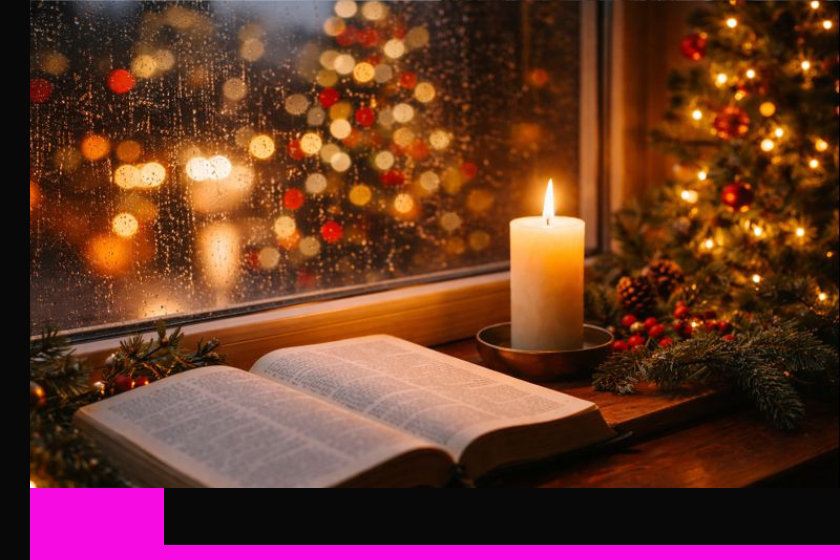
This is why I love the practice of lighting candles, whether for Hanukkah or Advent. One small flame does not erase the dark—but it does change the room. It gives orientation. It gives warmth. It tells the truth: there is more than we presently see.
The New Testament pushes this even further. Jesus does not only bring light. He shares it and invites us to do the same. “You are the light of the world.” (Matthew 5:14)
That means that in seasons like this—when violence shocks us and waters rise and grief feels close—Christian faith is not passive. Light looks like prayer, yes. But it also looks like showing up, telling the truth, refusing to numb ourselves, caring for neighbours, and resisting the lie that nothing can change.
In practical terms, light might be:
- Sitting with someone who is afraid rather than rushing to explain it away
- Giving generously when disaster hits
- Teaching our children that hope is not naïve, it is disciplined
- Choosing compassion over outrage in a culture addicted to anger
As winter solstice passes, the days will not immediately get warmer but they will begin to grow longer. Christmas does not deny the darkness we see on our screens or feel in our hearts. It declares that God has entered it—and that darkness does not get the final word.
So we light our candles. We sing our songs. We pray for the wounded, the grieving, and the afraid. And we trust, again, the ancient promise: “The true light that gives light to everyone was coming into the world.” (John 1:9)
In the long night, that is enough to begin with.